Imagine a warehouse full of valuable products where, every day, fleets of unmarked vans pull up outside.
Their drivers let themselves in, load up everything on the shelves and drive away to sell what they have taken to businesses around the world.
No contracts are signed. No permission is sought. The warehouse owner gets nothing.
Now multiply that by every major business website in the country and you begin to get a sense of what is happening to the UK’s digital economy. So called ‘bots’ are harvesting website content on an industrial scale, often without the owners knowing who is accessing their material and for what purpose.
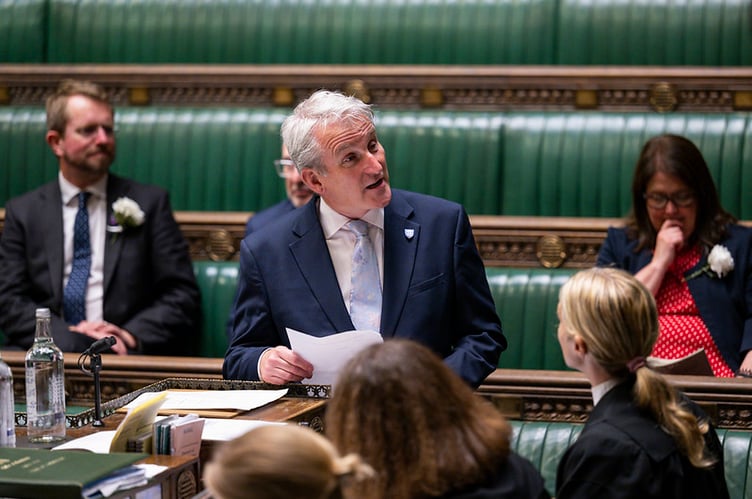
This week my Private Member's Bill (The Stealth Bots Bill, or to give it its official title ‘The Automated Online Software (Access and Transparency) Bill’) gets it Second Reading.
The Bill starts with a simple principle: if you operate a bot that accesses and takes content from a website, you should have to tell the owner who you are and what you intend to do with it.
Now I should say from the outset that, as a Private Member’s Bill, it has scant chance of making it onto the statute book. But I hope that by putting this problem on the political agenda, we can advance the debate.
What is so alarming about all this is that website owners are unable to identify the vast majority of bots attempting to access their sites. Many of these operators are gathering data to feed into AI models. Others are scraping material from news sources and making it available to AI assistants the moment a user asks a question, meaning the user may never visit the publisher's site at all.
Take someone asking an AI assistant a question about East Hampshire. They might receive an answer based on reporting carried out by journalists from this very newspaper, without ever knowing that those journalists did the original work.
That matters.




If people stop visiting local news websites, and the advertising that supports them, there is no return on the investment required to employ journalists and produce that reporting in the first place. Eventually, the stories simply stop being written.
Online retailers are another target. Bots can strip out pricing and product data at such a rate that they crash sites and lock out real customers. In the travel sector, bots add flights to their baskets without completing the sale, reducing availability for genuine customers.
My Bill is designed to give website owners a basic right: the right to see who is knocking on their door asking for content. It should then be up to the owners to decide whether to let them in.
Honest bot operators should have nothing to fear from greater transparency. In fact, they stand to benefit because transparency would help distinguish responsible operators from those operating in the shadows.
At heart, the Bill has a simple principle and one which underpins the operation of market economies. That is the ability to enforce property rights.
Comments
We've recently changed our login process. If you have an account for commenting, you will need to re-register on the login window.
This article has no comments yet. Be the first to leave a comment.