
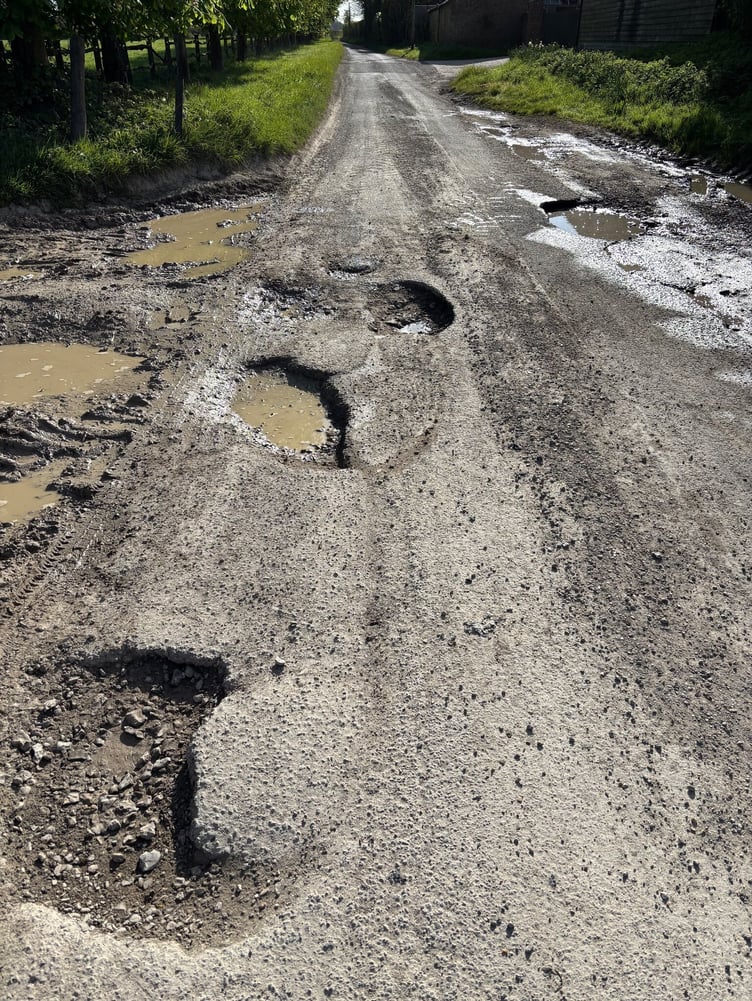
Hampshire County Council has warned it needs an extra £20 million to £30 million a year to tackle a roads repair backlog approaching £600 million, with critics describing the situation as a “never-ending backlog of repairs”.
Cabinet has backed a new five-year highway maintenance plan, which aims to improve the condition of roads through more preventative maintenance, resurfacing, better drainage and greater use of technology.
Tim Lawton, assistant director for highways, engineering and transport, said the backlog had been driven by years of underinvestment, inflation, increased traffic demand and more frequent extreme weather,
He argued that the biggest challenge was funding rather than the way highways were managed.
Mr Lawton said: “Our challenge is not on strategy or performance, it is fundamentally one of funding and scale.”
The report estimates Hampshire’s highway network is worth around £17 billion, but says the cost of bringing roads back to the required standard has risen to between £550 million and £600 million.
While the council says the backlog cannot be cleared within five years, it hopes to slow its growth and improve the network’s long-term condition.
The strategy was drawn up after full council called for a “major step change” in highway maintenance, including better quality repairs, more preventative work and improved drainage.
However, Cllr Jackie Porter questioned whether the proposals went far enough.
She said residents were losing confidence in the current system because faults often took too long to fix.




Cllr Porter said: “Residents are taught by us as councillors to report faults and repairs needed, but the length and time between that report and repair is far too long.
“So people report again and again, or come back to all of us to complain that nothing’s been done.”
Cllr Porter added councillors needed more than better reporting tools and urged the council to tackle what she described as the “systemic problem” of a “never-ending backlog of repairs”.
She said poor road conditions and drainage were contributing to flooding, congestion and disruption to residents’ everyday lives.
Cabinet agreed to ask the government to change the way local road maintenance is funded, including reviewing whether vehicle excise duty could be used to support local roads.
The council will lobby ministers for stronger powers to fine utility companies over poor-quality repairs following roadworks.
The strategy will now go before full council on October 1, for further debate.
Comments
This article has no comments yet. Be the first to leave a comment.