
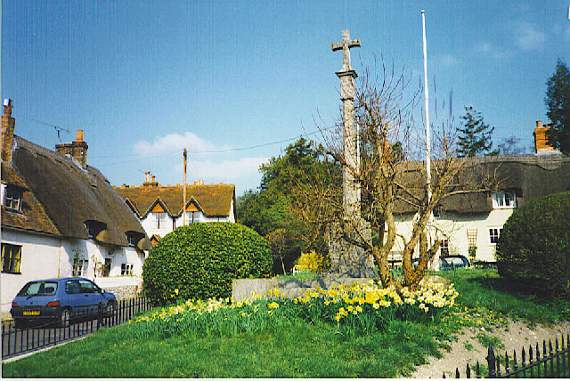
THE West Meon War Memorial is one of 68 across the South East to be listed duringthe summer as part of Historic England’s pledge to protect 2,500 memorials by 2018, marking the centenary of the end of the First World War.
And the public are being asked to put their war memorials forward for listing and to help look after them.
While, like West Meon, the majority of war memorials have been listed at Grade II, the war memorials at Ditchling in East Sussex, Harting in West Sussex and Bisham in Berkshire have been listed at Grade II*. All three memorials were designed by nationally renowned sculptor Eric Gill, one of the most celebrated letter cutters, engravers, typographers and sculptors of his time.
Eight war memorials listed this year in the South East can be found on National Trust land. Across the country, around 125,000 acres of National Trust land serve as war memorials in addition to 170 traditional monuments.


-Amber-warning-for-cold-weather.png?width=209&height=140&crop=209:145,smart&quality=75)
In the South East, this includes a series of monuments dedicated to two brothers, Norman and Laurence Robinson. Norman died in 1917 in Germany, while Laurence died at the Battle of the Somme in 1916. Their older brother, William, left a bequest to the National Trust for land to be bought “within reasonably easy distance from London” as a memorial to them. As a result there are nine different memorial sites, six of which have been listed in the South East.
As per William’s request, all but one incorporate high ground.
Built by communities in the years following the conflict, all these memorials are a poignant, physical reminder of the sacrifices and loss the First World War brought about.
In West Meon, near Petersfield, the First World War Memorial, which stands in the churchyard of the Church of St John the Evangelist, is listed as Grade II due to its historic and architectural interest. Described as “a sympathetic adaptation” of Sir Reginald Blomfield’s Cross of Sacrifice, it commemorates 30 servicemen who lost their lives during the First World War. The church is also Grade II listed, as are the churchyard railings.
Roger Bowdler, director of listing at Historic England, said: “One hundred years on, it is time to come together again to ensure our memorials are in good condition, and properly recognised by listing where appropriate.”
Historic England South East is asking the public to help look after their local war memorial.
“Many war memorials aren’t protected by listing and we need help to recognise these important monuments to make sure those they commemorate aren’t forgotten,” said Mr Bowdler.
He continued: “Researching, recording and recommending up to 2,500 more war memorials for listing over the next five years is a major task but one that Historic England is proud to undertake. These memorials will gain a place on the National Heritage List for England to tell the story of this country’s sacrifice and struggle.”
Historic England has pledged to list 2,500 war memorials over the centenary of the First World War. To do this, it needs the public to put their war memorials forward for listing.
This is all part of a wider partnership forged with War Memorials Trust, Civic Voice and the Imperial War Museums to help communities discover, care for and conserve their local war memorials. Working with enthusiastic volunteers across the country, the programme is providing up to £2m in grants for war memorial repair and conservation and hundreds of workshops to teach people how to record their memorials and put them forward for listing.
Individuals, communities and even schoolchildren from across the South East have already got involved in the campaign to look after the country’s memorials.
To find out how to go about getting a war memorial listed or applying for grant money for conservation and repair works, visit historicengland.org.uk.
Comments
This article has no comments yet. Be the first to leave a comment.