

THERE may be light at the end of the tunnel for householders and businesses in rural areas who are still struggling to achieve access to acceptable broadband speeds.
The latest government guidelines state all homes and businesses in the UK will have a legal right to demand high-speed broadband and access to speeds of at least 10 Mbps by 2020.
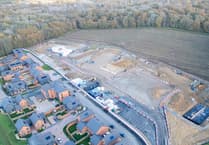
For businesses and residents at Griggs Green and along Longmoor Road, where the fibre cable route covers the sprawling Old Thorns Hotel and Golf Club, residential areas as well as the Taylor Wimpey development at Lowsley Farm, the latest announcement from Whitehall will be welcome news.
Many have vented their anger over the delay in providing high-speed broadband on Liphook Talkback and published a response recently received from BT Openreach, which said: “We often find unforeseen challenges and complexities that we simply couldn’t plan for.


“These may need either more time to work around or a different solution altogether. Our published dates in most cases are accurate.
“However, because of the aforementioned unforeseen challenges the estimated published date can be moved. We strive to share as much information as we possibly can to help make your choices.
“Sometimes there are challenges in physically deploying the network which can cause delays. The reasons could include planning rules, power provision, space constraints, etc.”
BT, which is responsible for the infrastructure, said it accepted the Government’s decision of a regulatory Universal Service Obligation, which offers certainty to users.
Matt Hancock, Minister of State for Digital, told BBC’s Today programme before Christmas: “Access means you can phone up somebody, ask for it and then someone has the legal duty to deliver on that promise. It is about having the right to demand it, so it will be an on-demand programme.
“So if you don’t go on the internet, aren’t interested, then you won’t phone up and demand this.”
BT responded last week by saying: “BT and Openreach want to get on with the job of making decent broadband available to everyone in the UK, so we’ll continue to explore the commercial options for bringing faster speeds to those parts of the country which are hardest to reach.”
Liphook’s Floss Mitchell included an update on the state of broadband connections in her monthly report at the last Bramshott and Liphook Parish Council meeting.
Hampshire County Council has also offered more advice. It said providers such as BT and Virgin Media were only willing to roll-out superfast broadband to about 75-80 per cent of premises in the UK.
The Government launched the Broadband Delivery UK programme to provide funding to support the roll-out of superfast broadband (24Mbps plus download speed) to those areas of the UK where rollout was not considered by the commercial providers to be economically viable.
The county council which is overseeing the scheme to bring fast broaband to rural areas, stated the programme’s first target of providing superfast broadband coverage to 90 per cent of UK premises (residential and commercial) by early 2016 was met.
It stresed it was now on track to meet the second target – 95 per cent coverage by the end of 2017.
The programme is delivered at a local level by the council’s Hampshire Super
fast Broadband team (www.hampshiresuperfast
broadband.com – email: [email protected]).
The public programme of investment will see more than 100,000 premises in Hampshire connected to superfast services via public funds. By the end of the programme in 2020, it is planned coverage in Hampshire will have reached 97.4 per cent.
The council points out it is important to note that although the project provides the technology and infrastructure that will allow residents and businesses to access a superfast service, they will not automatically get the service when the equipment in their area has been upgraded.
They will need to order it from an internet service provider – an ISP – such as BT or John Lewis or SSE.
Communications regulator Ofcom, has accredited various price comparison organisations and customers will be able to check which companies can provide internet services to premises and the relative costs of the various packages on offer.
Residents can also check mobile phone coverage and broadband speeds in their postcode using Ofcom’s online mobile and broadband checker service via www. checker.ofcom.org.uk
Any users who do not have broadband speeds of 24Mbps-plus yet, should register their interest by entering their postcode on the homepage of the Hampshire Superfast Broadband website, where they will automatically be notified when infrastructure in their area has been upgraded.
The council advises the 2.6 per cent of premises that will not be reached by the public programme of investment should consider a Community Fibre Partnership with BT Openreach.
The smallest such project in the county has been completed for a group of six premises and it is not always necessary for a large group of residents to come together for a scheme to be viable.
For a limited time, the council is offering a match funding scheme whereby it will provide up to half of the funding to match money raised by communities in order to install and maintain a superfast broadband connection in an area (subject to a cap on Hampshire County Council’s contribution of £1,650 per property).
Comments
This article has no comments yet. Be the first to leave a comment.