


Many in Farnham will be aware of the wonderful work done at Woodlarks looking after people with a range of physical and learning disabilities.
It is an organisation that has given vital support – and great hope – to numerous families.
We are immensely proud to have them in our community, knowing as we do the special pressures they have been facing during the pandemic.
Alas, the national picture is less encouraging. Far too often autistic people and adults with learning disabilities find themselves marooned in institutions where their care is supposed to be temporary but can often last five years or more.



Around 2,000 people with such conditions are currently in ‘assessment and treatment units’ or the inpatient parts of mental health-hospitals.
They are ‘secure’ which means patients are under lock and key. Families say they are often poorly treated, whether by frequent use of physical restraint, over-medication to ‘calm’ them or because they are kept in solitary confinement.
Compassion runs deep in Britain and is embodied by our NHS, of which we are all rightly proud.
But if we are to be true to the values it represents, we need to face up to challenging issues when they arise, which is why my Health and Social Care Select Committee has now started an inquiry to shine a light on the issue and make sure we really are doing what we can as a country for some of our most vulnerable citizens.
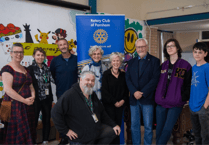
None of this should detract from the superb care at places like Woodlarks (pictured below) – indeed, we need to hold up beacons of excellence which other places can learn from.
But we also need to be honest about poor care.
As health secretary, I grappled with the aftermath of the Winterbourne View scandal, which happened shortly before I took up the job, when appalling treatment of residents was exposed in a shocking Panorama programme.
I worked closely with Norman Lamb, my minister in the coalition government, to address these issues. But nearly ten years on it is clear we have not made the progress we had hoped for.
This became clear in the evidence session we had this week when we heard very moving evidence from Alexis Quinn, who was diagnosed with autism at the age of 30.
She described what it is like to live under constant threat of being ‘sectioned’ – being detained in a secure unit. As an autistic person she was told she needed to ‘get better’ even though her autism was intrinsic to her personality.
She was confined indoors, strapped up above and below her knees and injected with sedatives – all of which could have been avoided if proper community care had been available.
The government has a welcome objective to halve the number of autistic and learning disability patients in in-patient settings by the end of the parliament.
But we should go further and follow Italy, where all new in-patient admissions have been banned by law. Following an inspiring programme in Trieste which then went national, there has been a large expansion of community care.
It has proved not just more humane but also less expensive.
Of course there will be some exceptions – such as when the law has been broken or life is at risk – but if there are better models in other countries, we should be willing to learn from them.
Comments
This article has no comments yet. Be the first to leave a comment.