
PRIME Minister Theresa May went on record this week outlining the Government’s 12-point Brexit plan for Britain.
While East Hampshire MP Damian Hinds appears optimistic that the UK will not be seeking an “off-the-shelf” pattern for future relationships with the EU but will work towards “a new and equal partnership”, the Wessex branch of the Federation of Small Businesses (FSB) has welcomed Mrs May’s determination to pursue “a bold and ambitious free-trade agreement with the EU”.
And the National Farmers Union (NFU) is also heartened by the Prime Minister’s acknowledgement that “access to a reliable workforce from overseas is vital for many British industries”.
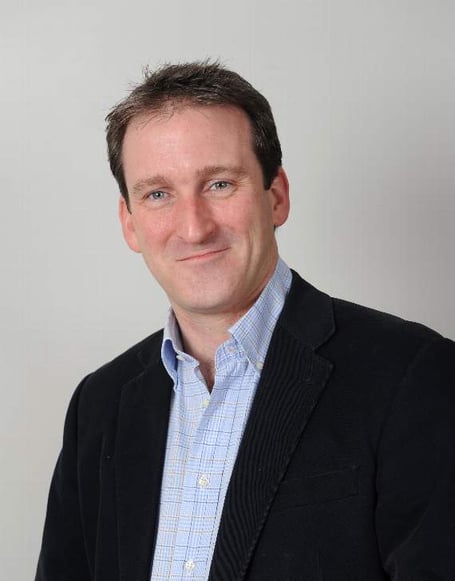
Commenting on the Brexit speech, Mr Hinds said: “I was glad to hear the Prime Minister’s objectives for our new relationship with the European Union. The tone was positive and the 12 areas she set out address the key points – not just on trade and immigration but for example on continuing cooperation in areas like science and fighting international criminality.

.jpg?width=209&height=140&crop=209:145,smart&quality=75)

.jpeg?width=209&height=140&crop=209:145,smart&quality=75)
“The result of the referendum was to leave the European Union, it was not a vote to leave Europe. We want to continue to be reliable partners, willing allies and close friends with European countries. We have historic, shared values.
“The PM was also right to identify that we have a shared interest in a good constructive outcome from the upcoming negotiations.”
Mr Hinds continued: “I think it is right that we are not seeking an off-the-shelf model for our new relationship. What Britain negotiates will be the deal that only Britain can negotiate. All negotiations involve compromises, of course, but it will be a new and equal partnership between an independent, self-governing Britain and our friends and allies in the EU.”
Mrs May’s 12-point plan for Britain is:
1 Provide certainty about the process of leaving the EU.
2 Control our own laws.
3 Strengthen the union between the four nations of the UK.
4 Maintain the common travel area with Ireland.
5 Control of immigration coming from the EU.
6 Rights for EU nationals in Britain, and British nationals in the EU.
7 Protect workers’ rights.
8 Free trade with European markets through a free trade agreement.
9 New trade agreements with other countries.
10 The best place for science and innovation.
11 Co-operation in the fights against crime and terrorism.
12 A smooth, orderly Brexit.
In a statement, the NFU said: “British farming underpins the country’s biggest manufacturing sector. Farming is of vital strategic importance for the country both in producing food for a growing population, being a driver of the rural economy, delivering high quality standards of food production and animal welfare, and also managing Britain’s landscapes, environment and natural resources. It is, therefore, vital that a post-Brexit Britain works for everyone, which must include our farming sector.”
Following the Prime Minister’s speech, the NFU Council re-iterated four principles which British food production needs in a post-Brexit Britain – the best possible access to trade with Europe, access to a competent and reliable workforce, the government to give commitment that agriculture is a key industry for Britain and a post-Brexit Britain will allow farmers to be profitable, productive and realise the potential of British food production, and that any changes to trading relationships or the agricultural policy affecting farmers should be subject to a period of transition to allow farming businesses to adapt to any new environment.
On behalf of FSB, national chairman Mike Cherry said of Mrs May’s speech: “We wanted to see the Prime Minister begin to sketch out a pro-business Brexit by addressing trade, talent and transitional arrangements.
“Ninety-three per cent of our members export directly to the single market. Our members want to see this bold and ambitious free-trade agreement so that they can continue to trade and operate within European markets. However, we will push the Government to guarantee whatever transition process is put in place ensures there is no cliff edge or gap in trade.”
In pointing out that one in five (21%) of FSB members export, Mr Cherry believes “this could be doubled with the right tailored small business support from the Department for International Trade along with new free-trade agreements with the fastest-growing markets in the world. Global trade will only flourish if the agreements prevent additional barriers, such as cost and paperwork.”
He continued: “Small employers will welcome the pledge to maintain the UK as a true magnet for international talent. We have pressed the Government hard to guarantee the right to remain for non-UK EU nationals in existing workforces, and no early cut-off date. Any future system must help small firms to easily recruit the right person, for the right job, at the right time.
And he added: “The Prime Minister’s other objectives show that there is a clear intention for transitional arrangements beyond the two year fixed period. We welcome the legislative certainty that comes with the Great Repeal Bill, to maintain the regulatory framework in the medium-term by incorporating EU law into UK law. After that, FSB will push Government and Parliament for the radical reform of the regulatory burden for small businesses.”
Mr Cherry concluded: “As the UK negotiating team assembles, evidence from FSB’s Brexit research programme will inform their work. Our job will be to make sure the voice of UK small business is heard in all these areas.”
Comments
This article has no comments yet. Be the first to leave a comment.