
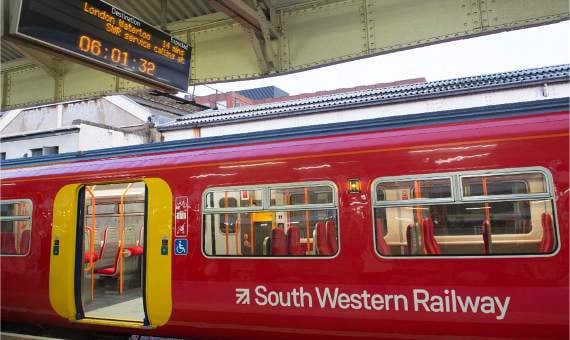
THE total number of passenger journeys on South Western Railway has plummeted by a UK-high eight-and-a-half per cent, as passenger groups warn that fare rises and industrial disputes are driving commuters off the rails.
The latest quarterly figures released by the Office of Rail and Road reveal SWR, which operates the Liphook to Waterloo line, recorded 4.8 million fewer passenger journeys across its network between July and September 2017 compared with the same quarter the previous year.
This was mainly due to the three-week engineering works at London Waterloo in August, with the shift in the franchise ownership from Stagecoach to First Group/MTR also partly to blame, acording to the Department for Transport.
But as South Western Railway commuters were confronted by average 3.3 per cent fare hikes on their return to work last Tuesday, and with yet more strike action this week, the Campaign for Better Transport said it was becoming evident that rail passengers are “voting with their feet”.
Stephen Joseph, chief executive of the Campaign for Better Transport, said: “Rail commuters are fed up with being used as cash cows for government coffers.
“This year’s rise is the highest for five years, at a time when wages aren’t increasing, and there’ll be real anger on the trains about this.
“But also there are signs that commuters are just voting with their feet and simply changing their work or homes to avoid the ever more expensive daily commute.”
Rail fares increased by an average 3.3 per cent across the South Western Railway network on January 2, against a national average of 3.4 per cent – the biggest hike since 2013.
Many passengers from Liphook, who travel first-class, board at Haslemere to take advantage of faster services to the capital.
An annual first-class season ticket from Haslemere to Waterloo rose from £6,752 to £6,992, while a standard season ticket increased from £3,972 to £4,112.
A first-class annual season ticket from Liphook costs £6,836 – the standard ticket costs £4,164.
By comparison, the latest figures from the Office for National Statistics show average weekly earnings fell 0.2 per cent in the autumn compared with the previous quarter, once inflation was factored in, confirming a squeeze on living standards.
The fare rises also come on the back of strikes by South Western Railway workers on November 8, November 9 and New Year’s Eve, the latter disrupting passenger’s New Year celebrations, and three more walkouts earlier this week – part of a long-running dispute over the role of guards.
South Western Railway managing director Andy Mellors, addressing the latest round of industrial action this week, apologised for the disruption and hit out at the RMT for targeting passengers wishing to celebrate the New Year with friends and family.
He said: “The last few months have been challenging with industrial action and poor performance making life difficult for everyone.
“Once again, our contingency guards will be on hand to ensure we keep you moving, although as these are working days and trains are likely to be busier than usual, we would encourage you to flex your journey and travel outside of the busy peak periods.
“None of us wanted to be in this position, and we have given the RMT repeated assurances that we plan to keep the second person on all our trains.
“Despite these reassurances, the RMT executive seems determined not to listen and is pressing ahead with these damaging strikes.”
RMT general secretary Mick Cash said: “Every single effort the RMT has made to reach negotiated settlements in these separate disputes with the different train operating companies over safe operation and safe staffing has been kicked back in our faces and we are left with no option but to confirm a further phase of industrial action in the New Year.
“No one should be in any doubt, these disputes are about putting the safety of the travelling public before the profits of the private train companies.
“It is frankly ludicrous we have been able to negotiate long-term arrangements in Scotland and Wales that protect the guards and passenger safety but we are being denied the same opportunities with rail companies in England.”
Comments
This article has no comments yet. Be the first to leave a comment.