
CHRIS Webb, the National Trust’s head warden in East Hampshire, gave a presentation to Bramshott and Liphook Parish Council’s planning committee on proposals to reintroduce grazing at Ludshott Common.
The National Trust is undertaking consultations on the future long-term management of the common and is proposing to reintroduce grazing in order to protect the landscape, maintain the heathland habitat and protect a range of important and rare plant, animal and bird species.
Ludshott Common is one of the largest remaining areas of heathland in East Hampshire, covering 700 acres.
It is registered and designated a Site of Special Scientific Interest (SSSI) and Special Protection Area (SPA) due to the number of endangered species, including woodlarks, nightjars and Dartford warblers.


There are also a great many spiders and butterflies, including silver-studded blue, grayling and green hairstreak.
It has been a common since the 13th century, when people first exercised commoner’s rights, but grazing ended in the 1930s.
Mr Webb explained the amount of heathland in East Hampshire has declined by more than 75 per cent in the past two centuries, from 11,500 acres in the 1800s to around 2,000 acres today.
He added the last big fire on Ludshott Common was in 1980 and a great deal of work has since been conducted to keep the heathland open and clear of scrub and gorse, including “mechanical grazing”, which has not been that successful.
To reintroduce grazing a stock-proof boundary fence would be required and the National Trust would need to apply for permission from the Secretary of State, having first conducted a common-purpose consultation as set out by DEFRA.
Currently, there are mainly roe deer grazing on the common, and they can easily jump a stock fence and would not be inhibited in any way.
Mr Webb said: “The British Horse Riding Society supports the idea providing horse-friendly gates are used and one commoner has expressed interest already to graze his cattle there.
“However, it will take considerable time to obtain permission.
“The stocking density would be similar to that of the New Forest where there is heavy recreational use.
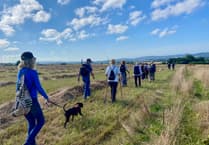
“In addition cattle would have to be selected to ensure that they are quiet, placid and compatible with people and their dogs, who want to walk on the common.
“The New Forest is undoubtedly the best model of what the National Trust would like to achieve at Ludshott Common.”
Parish councillors are fully in favour of the proposal and agreed to send a letter of support to the East Hampshire branch of the National Trust.
Comments
This article has no comments yet. Be the first to leave a comment.