
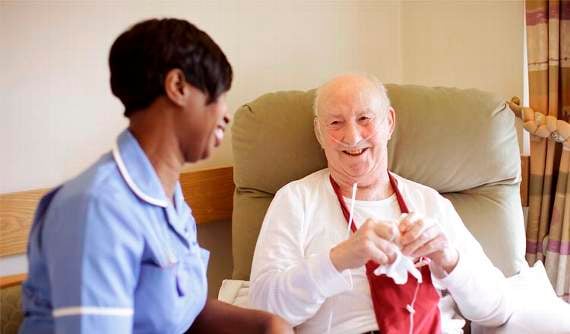
CARE homes may soon overtake hospitals as the most common place for people to die in Waverley.
The latest data from Public Health England reveals about 35 per cent of the deaths registered in 2016 occured in care homes – up from 25 per cent five years earlier.
The data identifies the four most common places of death, as hospitals, care homes, hospices and people’s homes.
Although most deaths in Waverley still occur in hospitals, the number has fallen in five years, from 488 in 2011, to 445 in 2016.



Only 21 per cent of the deaths occured at home while five per cent took place at hospices – specialised premises focused on improving the lives of people who have an incurable illness.
A study carried out by King’s College London last year revealed most people prefer to die in the place they are usually cared for, including at home, rather than in a hospital.
Researchers found deaths occurring in care homes in England and Wales could more than double in the next 25 years, if recent trends continue.
They argue investment is urgently needed to ensure all care homes are prepared to support residents as they reach the end of their life.
Without significant investment, they believe the extra deaths are likely to occur in hospital instead.
Study author Anna Bone said: “The projected rise of deaths in care homes is striking and warns of the urgent need to ensure adequate bed capacity, resources and training of staff in palliative care in all care homes in the country.
“If we are to continue enabling people to die in their preferred place, it is essential to invest more in care homes and community health services.
“Without this investment, people are likely to seek help from hospitals, which puts pressure on an already strained system and is not where people would rather be at the end of their lives.”
Professor Irene Higginson, director of the Cicely Saunders Institute – a group of researchers on palliative care – added: “This study shows end-of-life care will become the core business of health and social care services in the near future.
“We need urgently to prepare for this. We must ask care home and community services whether they are equipped to support such an increase, and provide care of quality.
“The time has come to test new approaches, such as innovative palliative care models in care homes and the community, to ensure we address this growing need which will affect us all, directly and indirectly, in the years to come.
“Otherwise we will be faced with more deaths in hospital, or poor quality end-of-life care – or both.”
On average, 47 per cent of deaths registered in England in 2016 occurred in hospitals. Home was the second most common place to die, accounting for 23 per cent of the total.
It was 22 per cent in care homes, followed by hospices, with just six per cent.
Rick Wright, policy manager at the Marie Curie charity, said: “The number of care home beds available to people aged 75 or over has been steadily declining in recent years.
“This lack of capacity in care homes often leaves people stuck in hospital at the end of their lives.
“It’s plain to see the demand for community-based end-of-life care is increasing rapidly beyond the ability to deliver it.
“The country is woefully unprepared for the care needs of the future.”
Comments
This article has no comments yet. Be the first to leave a comment.