
WAVERLEY’S Covid-19 infection rate dropped to 25 cases per 100,000 people this week – the borough’s lowest rate for six months, and significantly below the England average and that of neighbouring areas.
But that is just one cause for optimism, says Dr Ed Wernick, the GP leading Farnham’s response to Covid-19, with coronavirus-related hospital admissions and deaths also significantly down locally, and the town’s vaccine supplies set to double to around 4,300 a week from Monday.
“Until now we have been given very little control over vaccine supplies locally,” said Dr Wernick.
“You may be given a week’s notice, the vaccines arrive, then if they are Pfizer you have just three days to use them. The logistics of setting that up are very complicated.

_-004.jpeg?width=209&height=140&crop=209:145,smart&quality=75)

“Now what’s happening is we’re being given a steady allocation of AstraZeneca, which is hugely helpful and means we can start setting up regular clinics, and book vaccinators and volunteers multiple weeks in advance.
“It gives us a much more standardised programme and we’re looking to open seven days a week, two sessions a day, which gives greater flexibility for staff and for patients.”
Dr Wernick added this show of faith by NHS England is in recognition that community clinics are “better placed than mass vaccination sites for reaching the most vulnerable and at risk groups, and reducing travel times and understanding people’s needs”.
And he said the increased rate of supply should enable the town’s vaccine hub to give the majority of adults their first dose, “before getting into the main section of everybody’s seconds” – though some of the town’s more elderly patients and care home residents are already being given their second doses.
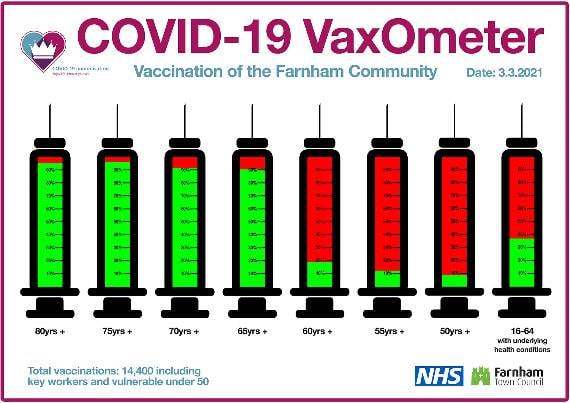
As revealed in the ‘Vax-Ometer’ below, created in partnership with Farnham Town Council, 14,400 people have now been vaccinated in Farnham including almost all those aged 65-plus, key workers and the most ‘clinically extremely vulnerable’ under-50s.
GPs hope to give first doses to all those in the ‘16 to 64 with underlying health conditions’ category in clinics tomorrow and Saturday, before turning their attention to the over-60s, 55s and 50s from next week.
Many of Farnham’s over-50s are also being sent letters inviting them to attend mass vaccination sites if able to travel.
But GP surgery staff have stressed the choice lies with patients, in line with other NHS services, and should anyone choose not to visit a mass vaccination site, they will be contacted by the town’s local vaccination service in due course.
It is key, though, that patients return for their second doses at the same site as their first, to help the NHS manage supplies locally.
Farnham’s vaccine hub has been supported by an army of volunteers and vaccinators including GPs, both practicing and retired, nurses and even physiotherapists who – like Dr Wernick’s wife Priya – were accredited to administer the vaccine earlier this year.
And Dr Wernick said, thanks in part to the Herald’s own Fight for Freedom volunteer drive in January, Farnham’s vaccine hub has historically had more willing helpers on its books than it has needed.
Many of these will likely be called upon in the coming months, however, and with an ‘autumn booster’ rumoured, the town’s GPs are planning for the long haul.
Dr Wernick continued: “People have said they may be able to do four sessions a week – but does that become sustainable as the economy, schools and other aspects of normal life, start opening up?
“We know we’re probably going to need to recruit more, but we’ve got a relatively well-oiled machine bringing people on now, so I’m confident.”
Comments
This article has no comments yet. Be the first to leave a comment.