
THE Department for Education (DfE) has clarified its position on faith schools, following a recent interview in The Sunday Times.
After East Hampshire MP and Secretary of State for Education Damian Hinds was widely reported that he intends to lift the 50 per cent admission cap on faith schools, senior civil servants in Whitehall said this week any decision depends on the results of a consultation into the matter.
The 50 per cent rule ensures religious schools have a mixed intake – a controversial policy in Theresa May’s election manifesto last year was to drop the idea.
The policy switch would have allowed such schools to tailor a greater proportion of students they accept, and exclude, based entirely on religious affiliation.




The Sunday Times reported Mr Hinds, who is a practising Catholic and was educated at a voluntary-aided Roman Catholic grammar school, planned to go ahead with the previously abandoned pledge to lift the cap.
He told the paper: “There are thousands of faith schools all over the country and almost none of them have a cap on their admissions. The cap relates only to new free schools of a religious character.
“I’m interested in having good school places and that includes schools with a religious aspect.
“Where there is parental demand and where there is a need for places, I want it to be possible to create those new schools.”
A Department of Education spokesman explained that, despite reports, the new Minister did not explicitly confirm the cap would be lifted. The spokesman added: “The Government is committed to offering parents and children a diverse education system with a wide variety of high quality providers - and this includes faith schools.
“We will be responding to the Schools that Work for Everyone consultation, including plans for the faith cap, in due course.”
He also told the paper – in a marked break from his predecessor Justine Greening he would ‘enthusiastically back’ the expansion of England’s existing 163 grammar schools.
The latest comments came following Mr Hinds’ first series of major interviews since becoming Education Secretary, in which he outlined his vision for the future, and spoke about the Government’s much-publicised higher education review.
Mr Hinds said it was right to consider tertiary education in depth to understand: “How best to improve both the accessibility and value of higher and further education for all.”
Part of the process has seen a shift in focus and a broadening of what higher education actually means – Mr Hinds believes there is ‘a real opportunity’ to consider the role of technical training alongside academic study.
The DfE said work is also under way to transform technical education post-16 by introducing new T levels - providing technical qualifications to rival traditional academic options – and overhauling apprenticeships to help provide the skills our economy needs.
Although ‘significant progress’ has been made, the Government thinks it is clear the current post-18 system is not working as well as it could be - for young people or for the country.
The department said this week: “The review will ensure post-18 education is giving everyone a genuine choice between high quality technical, vocational and academic routes, students and taxpayers are getting value for money and employers can access the skilled workforce they need.”
PM?Theresa May has warned against ‘outdated attitudes’ that favour academic over technical qualifications. She pledged to: “Use the review to look at the whole post-18 education sector in the round, breaking down false boundaries between further and higher education, to create a system which is truly joined up,” Mrs May said.
East Hampshire has already taken strides towards catering for a wider array of practical education, with the new Future Skills Centre, in Bordon, welcoming its first students in September.
Hosting courses on bricklaying, plumbing, carpentry and more, the centre offers qualifications which focus on the built environment for anyone from across the district keen to learn new skills
Driving up quality, increasing choice and ensuring value for money are at the heart of the PM’s review, launched last week.
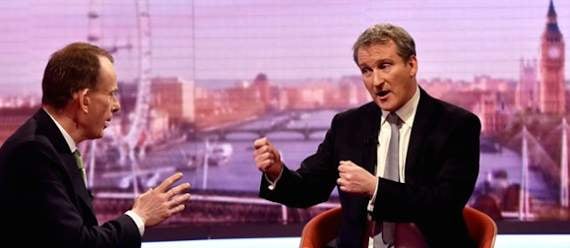
Appearing on the BBC’s The Andrew Marr Show, the previous weekend, Mr Hinds also spoke about the Government’s higher education review, launched on Monday.
He said: “Our post-18 education system has many strengths. It has a fantastic global reputation, we have record rates of disadvantaged students going to university and we are transforming technical education so employers have access to the skills they need.
“But there needs to be greater choice, in terms of cost, and, in how courses are structured. There is a real opportunity to consider the role of technical training alongside academic study, making sure young people can choose the right route to gain the skills and expertise they need for the future,” said Mr Hinds.
“For some, that might be a shorter course or studying closer to home; for others it might be an apprenticeship degree so they’re able to earn and learn at the same time.
“The review will consider all aspects of higher and further education provision, and the value delivered for students and the taxpayer.“
Comments
This article has no comments yet. Be the first to leave a comment.