
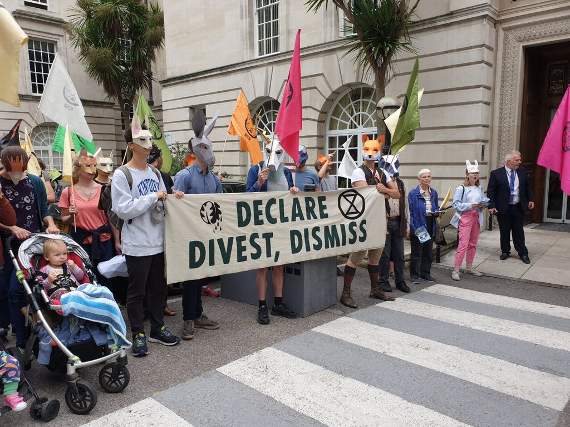
SWITCHING to renewable energy tariffs, removing single use plastics from their buildings and re-writing planning policies will be just some of the changes councils could be making where a climate emergency has been declared.
These include East Hampshire District Council (EHDC), with Waverley Borough Council (WBC) expected to vote on a motion soon.
But what does it mean? Once a climate emergency is declared campaigners say policy now needs to change so residents can benefit from the commitment.



In order for a council to reach net zero emissions it could make the following changes:
? Refit council buildings to run-off renewable energy sources
? Remove cash investments of pension funds in fossil fuel companies (county council only)
? Remove single use plastic from council buildings.
? Introduce zero carbon targets into planning policies
? Reduce fuel poverty
? Improve energy efficiency of council houses
? Replace council-owned public transport with electric vehicles
? Introduce licensing to make all taxis electric
? Object to road expansions
? Use LED bulbs in street lights
? Reduce waste
? Encourage more recycling
? Oppose expansion at Heathrow and Gatwick
? Refuse more oil drilling applications (county council only)
? Introduce more cycling lanes and more bus shuttles
The UN Paris Agreement has set a target for countries to reach net zero greenhouse gas emissions by 2050.
The UK Government has pledged to cut carbon emissions by 80 per cent by 2050.
Tim Paige, a member of environmental campaign group Extinction Rebellion, said: “Most importantly, from a democratic point of view, all councils should be setting up legally binding citizen’s assemblies to take the political bias out of the policy decisions that are needed to fight this challenge.”
By declaring a climate emergency, many councils have heeded campaigners’ calls to pledge to be fully carbon neutral by 2030 – and set out plans for immediate and long term actions to reach this goal.
Hampshire County Council has accepted this unabridged.
But EHDC faced criticism when announcing an emergency in late July for setting “no time limit for action”.
Surrey County Council (SCC) has also set an alternative time scale, pledging to be carbon neutral by 2050 – in line with the national objective.
However, Surrey residents are being invited to have their say on what the county council can do to go zero carbon by this date – with a public consultation open at surreycc.gov.uk/greenerfuture until September 15.
Andy MacLeod, Farnham Central county councillor and chairman of the Surrey’s Greener Future task group, said: “This is a real opportunity to influence how all of us who live or work in Surrey can do our bit locally and contribute to efforts globally to tackle climate change.
“That’s why we want to hear both people’s personal views and expert opinion from right across the county.”
Comments
This article has no comments yet. Be the first to leave a comment.