
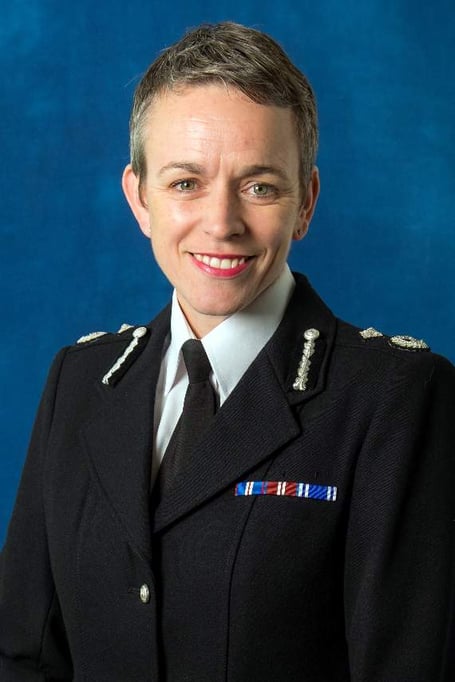
HAMPSHIRE’S top police officer has called for better funding as pressure on the force has ‘never been higher.’
Chief Constable Olivia Pinkney’s comments came after the Audit Office said last week the Government didn’t understand the impact of budget cuts.
According to the UK’s public spending watchdog, the Home Office does “not know if the police system is financially sustainable”. The Audit Office also claimed the way Whitehall chooses to distribute funding had “been ineffective and detached from the changing nature of policing for too long.”
As it has taken a “light touch approach to overseeing police” it did not know the effect of the 19 per cent real terms cut to forces since 2010-11.


The report made national headlines last week after, a perceived increase in petty crime was blamed on a diminished police presence in East Hampshire,
But for Hampshire Constabulary’s chief constable, none of that came as a surprise. “We’ve been open about the fact that the pressure on operational policing in Hampshire has never been higher,” she said. “We‘ve seen the impact of this over the summer, with the force having to ask for mutual aid from other forces to support us during this period of exceptional demand and to assist with some of our biggest investigations.
“We have repeatedly made the point that national funding for policing does not deliver a fair deal for the people of Hampshire.We share the frustration outlined in the report that sorting this out has not happened. Fair funding would mean more frontline resource and make a massive difference to the service we can deliver for our communities.”
The National Audit Office highlighted the ‘main way’ police forces have managed financial pressures is by reducing their workforce, a trend reflected in Hampshire. Crucially, the Home Office has, the audit office said, “not forecasted what impact this will have on forces’ ability to meet increasing demand”.
Hampshire Constabulary has also sold-off much of its estate to make ends meet. Stations in Petersfield, Whitehill and Alton have clsoed, meaning people have to travel to Aldershot or Basingstoke to speak to officers face-to-face to report crimes. But police maintain that has not had an adverse impact on local patrols despite some residents blaming petty crime on a lack of visible officers.
A Hampshire Constabulary spokesman said the East Hampshire neighbourhood policing team was ‘pretty much staffed to full establishment’ and officers continued to have a ‘proactive role’ in reducing crime.
Hampshire Police and Crime Commissioner Michael Lane welcomed the report on police funding. He said: “It raises important issues around the resourcing of policing amid the changing nature of demand that puts additional pressure on constabularies. I have always said the funding formula was out of date and disadvantages the area I represent. Until this is addressed, it will remain a continuing challenge to maintain operational effectiveness within the limited budget we have available.
“Since my election as police and crime commissioner, I have lobbied hard on behalf of the people I represent for fairer and sufficient funding for policing in our area. I recognise that there are other pressures on Government, but I do believe that addressing the national funding formula is essential for long-term sustainability and it cannot come soon enough for my area.
“I have the privilege to have a national voice on the Police Reform and Transformation Board, which I sit on, and I plan to continue to use my voice to fight for appropriate transformation and change to ensure policing is operationally effective, modern and fit for the future.”
A Home Office spokesman said the decision to “empower locally accountable police and crime commissioners to make decisions using their local expertise” does not mean “that we do not understand the demands on police forces”.
They also said that last year they conducted a substantial review of police pressures and retain ‘a strategic direction.’
“The report does not recognise the strengths of police and crime commissioners and chief constables leading on day-to-day policing matters, including on financial sustainability,” the spokesman added.
“We remain committed to working closely with police and delivered a £460m increase in overall police funding in 2018/19, including increased funding for local policing through council tax.”
Amyas Morse, head of the National Audit Office, said: “The financial sustainability of police forces and their ability to deliver effective services is reliant on the Home Office understanding national and local demands and allocating funds fairly.
“There are signs that forces are already experiencing financial strain and struggling to deliver effective services to the public.
“If the Home Office does not understand what is going on it will not be able to direct resources to where they are needed, with the risk that the situation could get worse.”
Comments
This article has no comments yet. Be the first to leave a comment.